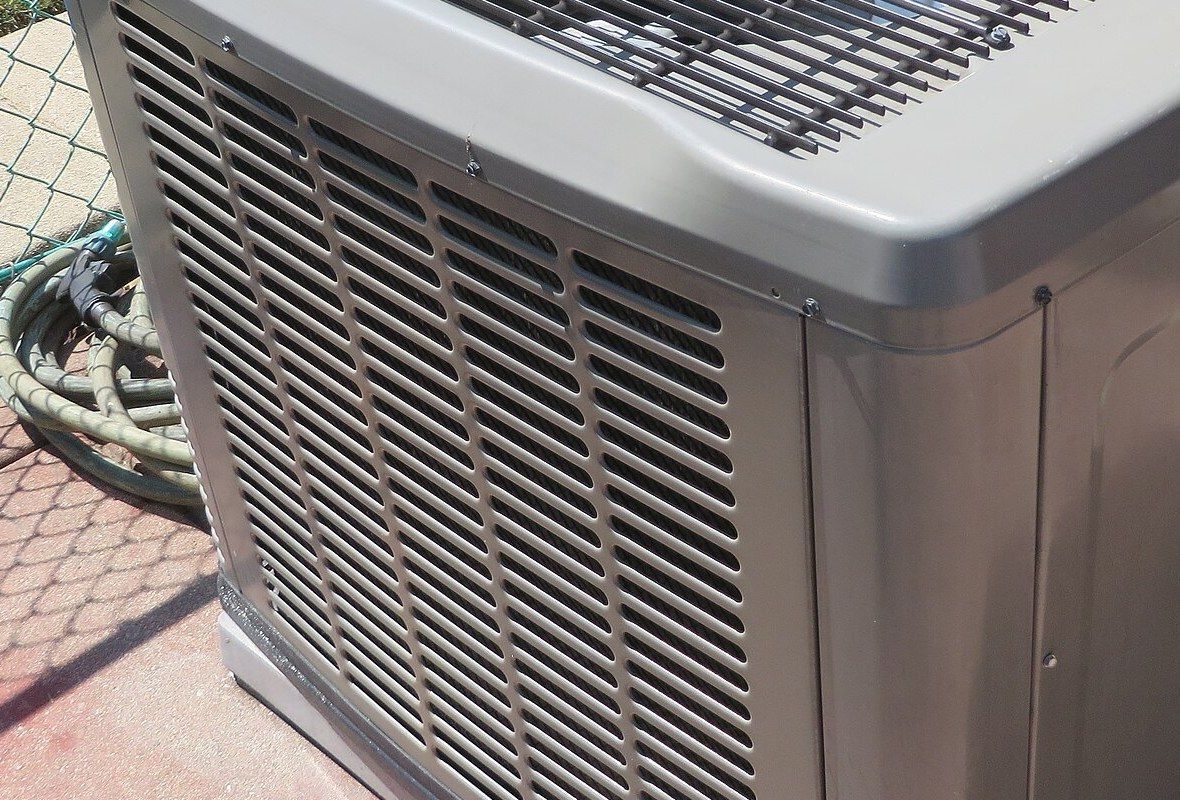
What should I do if my AC unit is frozen?
Turn cooling off at the thermostat, set the fan to On to thaw the coil, and check the filter. Then wait until all the ice has melted before you run cooling again.
- Cooling off, fan on. The blower pushes warm room air across the indoor coil and melts the ice faster. If the fan won’t run, leave the system off and let it thaw on its own.
- Check the filter. If it’s gray and clogged, replace it. A blocked filter is the most common cause of a frozen coil.
- Open every vent and clear furniture and rugs away from return grilles.
- Don’t chip, scrape or pry the ice, and don’t aim a heater at it. The fins and tubing are thin, and a punctured coil means a refrigerant leak.
- Watch the drain pan. Melting ice makes a lot of water at once. Check the pan under the indoor unit, in the attic, closet or crawlspace, and lay towels down. If the pan overflows or a float switch has cut the power, the drain line may be clogged. Many lines have a capped access port near the indoor unit for flushing, or you can clear the outside end with a wet/dry vacuum.
- Restart once it’s dry. Turn cooling back on and watch it. If ice comes back within a day, something is wrong that a filter won’t fix.
Why do AC coils freeze?
The indoor coil freezes when it drops below 32°F. That happens when too little warm air crosses it or there is too little refrigerant in it, and moisture from the air then freezes onto the coil and builds up.
A healthy coil runs cold but above freezing, and the water it pulls from the air drips into the drain pan. Take away airflow or refrigerant and the coil gets colder, frost forms, the frost blocks more air, and within hours the coil is a block of ice. In a humid Upstate summer there is plenty of water in the air to feed it.
Which airflow problems freeze an AC?
Anything that cuts the air across the indoor coil can freeze it: a dirty filter, closed or blocked vents, a dirty coil, or a blower that is weak or has stopped.
- Filter. Change it every 1 to 3 months, more often with pets.
- Vents. Closing vents in unused rooms starves the system; keep most of them open.
- Dirty indoor coil. Dust that gets past a filter coats the coil and acts like a second, clogged filter. Cleaning it is a technician job.
- Blower. A failing blower motor, or the capacitor that starts it, slows the air. A standard blower motor runs $450–$1,000; a variable-speed motor runs $900–$2,000.
- Ducts. A crushed or disconnected duct in the attic or crawlspace can choke airflow to part of the house.
Can low refrigerant make an AC freeze?
Yes. When the charge is low, the pressure in the indoor coil drops and so does its temperature, below freezing. Refrigerant isn’t used up, so low refrigerant always means a leak.
A recharge without fixing the leak just buys time. A technician should find the leak ($200–$500), repair it ($300–$1,500, refrigerant extra) and recharge ($200–$650 for a typical top-up). R-410A costs $60–$110 a pound installed. On an R-22 system, at $125–$250 a pound, a leak is a reason to read repair or replace.
Why does my AC freeze at night?
Air conditioners aren’t built to run when it’s cool outside. On cool spring and fall nights, or with the thermostat set very low, the system runs long against little heat and the coil can drop below freezing, especially if airflow or charge is already marginal.
Keep the setpoint reasonable and switch cooling off on cool nights. If the system freezes even in hot weather, look back at airflow and refrigerant.
Is ice on the outdoor unit normal?
In summer, no. Ice on the outdoor unit of an air conditioner, usually on the larger insulated copper line, means the indoor coil is freezing too, from low airflow or low refrigerant.
In winter, a thin layer of frost on a heat pump’s outdoor coil is normal. The heat pump melts it off in a defrost cycle every so often, often with a puff of steam. A heat pump that stays white with ice, or one that blows cold air during the thaw, is covered in why a heat pump blows cold air.
What does it cost to fix a frozen AC?
Plan on the diagnostic fee of $75–$150, then a typical “ice on the unit” repair of $150–$900. A filter costs you only the filter; a leak or a blower motor costs more.
| Cause | Typical cost |
|---|---|
| Diagnostic visit | $75–$150 |
| Refrigerant leak search | $200–$500 |
| Leak repair (refrigerant extra) | $300–$1,500 |
| Recharge | $200–$650 |
| Blower motor, standard | $450–$1,000 |
| Blower motor, variable speed | $900–$2,000 |
| Clogged drain line | $100–$250 |
Many contractors credit the diagnostic fee toward the repair, so ask. More on HVAC prices in Seneca.
When should you call a technician?
Call if the coil freezes again after a thawed restart with a clean filter and open vents, if you hear hissing or see oily spots on the lines, or if water is overflowing the drain pan.
Safe for you: the thermostat, the filter, the vents, the breaker (reset once), and the drain line’s access port. Leave refrigerant, the electrical panels inside the indoor and outdoor units, and the coil itself to a licensed technician. Book AC repair in Seneca or get a ballpark price and a licensed local HVAC contractor will call you back.