What HVAC rebates can you get in SC right now?
As of October 2026, the main one is Duke Energy’s Smart $aver rebate, roughly $350–$900 on a qualifying heat pump. The federal 25C tax credit has ended, and the state’s HOMES and HEAR rebates have not launched.
| Program | Status as of October 2026 |
|---|---|
| Federal 25C credit (30%, up to $2,000 for heat pumps) | Ended for equipment placed in service after December 31, 2025 |
| Federal 25D credit (geothermal, solar) | Ended for expenditures after 2025 |
| SC HOMES and HEAR rebates | Not launched; “expected to launch in 2026”, no date |
| Duke Energy Smart $aver | Available to Duke Energy Carolinas customers |
| Blue Ridge Electric heat pump loan | Ask the co-op for current terms |
| Seneca Light & Water | No HVAC rebate found; ask the city |
| SC geothermal income tax credit | 25% of the cost, up to $3,500 a year |
| SC sales-tax holiday | Does not cover HVAC |
Is there still a federal tax credit for heat pumps?
No. The 25C Energy Efficient Home Improvement Credit, worth 30% up to $2,000 for a heat pump, ended for equipment placed in service after December 31, 2025, under the One Big Beautiful Bill Act.
“Placed in service” means installed and ready to use, not paid for. A system you paid for or put a deposit on in 2025 but that was installed in 2026 does not qualify (IRS fact sheet FS-2025-05, August 2025). A system installed by December 31, 2025, can still be claimed on your 2025 return on Form 5695; if you filed without it, ask a tax preparer about amending.
The 25D Residential Clean Energy Credit, which covered geothermal heat pumps and solar, also ended for expenditures after 2025.
Many HVAC websites still advertise the 30% credit. If a quote or a sales pitch counts it toward your cost, it is out of date. Ask for the price without it.
When will SC HOMES and HEAR rebates start?
There is no date. As of October 2026 the SC Energy Office, part of the Office of Regulatory Staff, says the rebates are expected to launch in 2026, and neither program is taking applications.
The planned design, which could still change:
- HEAR (Home Electrification and Appliance Rebates): up to $14,000 per household for incomes below 150% of area median income. A May 2026 federal change limits its heat pump rebates to homes that already heat with electricity, and to new construction.
- HOMES (Home Owner Managing Energy Savings): $2,000 to $16,000, based on the energy savings a project achieves.
- An approved contractor must do the work, and replacing an existing heat pump with another heat pump is not eligible.
Sign up for the state’s interest list at energy.sc.gov. Don’t wait on it to replace a failed system, and plan as if anything installed before launch won’t qualify.
How much is the Duke Energy heat pump rebate?
Duke Energy’s Smart $aver program pays Duke Energy Carolinas customers in South Carolina roughly $350–$900 for a qualifying heat pump. The amount depends on efficiency, starting at 15.2 SEER2, and on whether it’s an early replacement of a working system.
Other Smart $aver amounts, as published:
- About $1,500 for converting electric furnace or baseboard heat to a heat pump.
- $200 to $500 for a qualifying central air conditioner, again by efficiency and timing.
- About $125 for a qualifying smart thermostat installed with the system.
- Mini-splits need 18 SEER2 or more; see mini-split costs in SC.
A participating contractor must submit the rebate within 60 days, so ask before you sign whether the contractor takes part and who files. Note that 15.2 SEER2 is Duke’s first rebate tier, not the legal minimum, which is 14.3 SEER2 for a split heat pump. Amounts change: confirm them on duke-energy.com before you count on one.
What do Blue Ridge Electric and Seneca Light & Water offer?
Blue Ridge Electric Cooperative offers members a heat pump loan repaid on the power bill over up to 60 months. It needs a Blue Ridge approved dealer, a full-unit replacement and at least 12 months of membership; ask the co-op for current terms. Seneca Light & Water, the City of Seneca’s own electric utility, has no HVAC rebate that we found, so ask the city before you buy.
Compare a co-op loan with contractor financing, which often uses deferred-interest promotions that back-charge all the interest if the balance isn’t paid in time.
Which utility serves your home?
Your power bill says. Around Seneca it is usually one of three: Duke Energy, Blue Ridge Electric Cooperative or Seneca Light & Water.
- Inside Seneca: many homes are on Seneca Light & Water, the city system.
- Elsewhere in Oconee and Pickens counties, including around the lakes: Duke Energy and Blue Ridge Electric serve much of the area, and their boundaries don’t follow town lines, so neighbors can differ. If your bill comes from a town, ask the town.
- Gas: Fort Hill Natural Gas Authority serves Oconee, Pickens and northern Anderson counties. Many rural homes have no gas line and use propane or an all-electric heat pump.
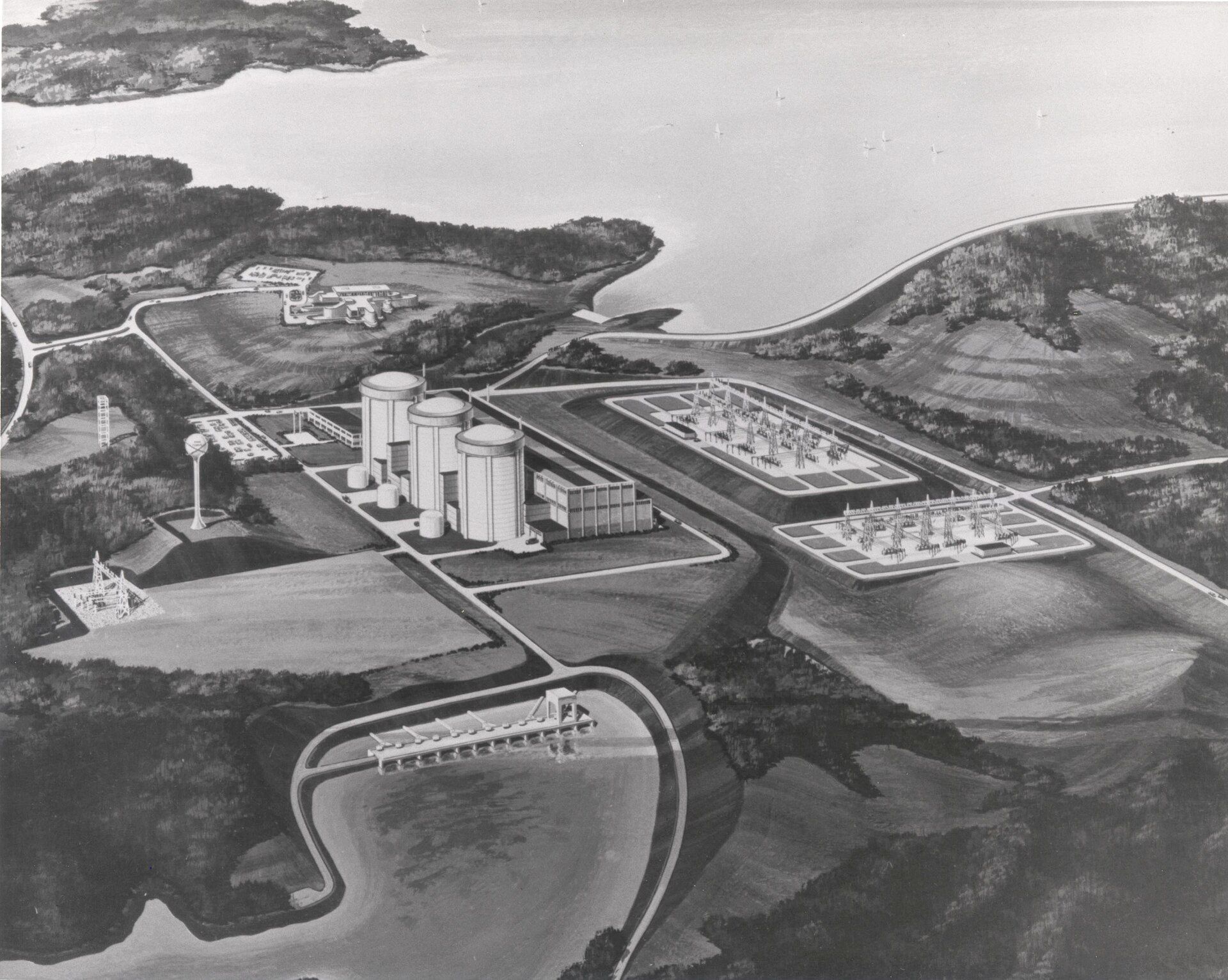
Duke Power built Lake Keowee and Oconee Nuclear Station in the late 1960s and early 1970s; the picture above is a 1968 artist’s concept of the station.
Is there a state tax credit or sales-tax holiday for HVAC?
Only for geothermal. South Carolina gives a state income tax credit of 25% of the cost of a geothermal heat pump, capped at $3,500 a year, and no SC sales-tax holiday covers HVAC equipment.
A standard air-source heat pump, AC or furnace gets no state tax credit. Ask a tax preparer before counting on the geothermal credit.
How do you make sure the rebate gets paid?
Settle it before you sign: put the rebate program, the model numbers and the SEER2 rating in the written quote, and confirm who submits the paperwork. A missed 60-day deadline or a non-participating contractor can cost you the Duke rebate.
Ask the contractor:
- Which rebate does this exact system qualify for, and at what amount?
- Are you a Duke participating contractor, and will you file within 60 days?
- Does the rebate come to me as a check, or off the invoice?
- Is the AHRI certificate for this matched system in the quote?
Where do you get a price with the rebate in mind?
Start with a ballpark, then get a written quote that names the rebate. The estimator shows the Duke range next to a heat pump price without taking it off.
Read about AC and heat pump replacement in Seneca, or get a ballpark for a new heat pump and we’ll pass your request to a licensed local contractor.